Of all the decisions that shape how a brand is perceived, typography is among the most underestimated. Colour attracts immediate attention. Photography sets the mood. But typography is the element that communicates personality, establishes credibility, and creates the underlying tone of everything a brand produces. Businesses that invest in a thoughtful typographic system, alongside a well-considered logo and cohesive visual identity, build brands that feel intentional and authoritative. Those that choose fonts casually and apply them inconsistently often undermine their own credibility without understanding why.
What Typography Actually Communicates
Every typeface carries implicit associations built from decades of cultural use. Although there are exceptions, these associations often influence how people perceive a brand. Serif typefaces suggest heritage, reliability, and authority. Sans-serif typefaces suggest modernity, clarity, and accessibility. Script typefaces suggest elegance, craft, or warmth depending on their specific character. Monospaced typefaces suggest technical precision. These associations often influence how people perceive your brand, even if they aren’t consciously aware of them. Imagine a law firm using a playful, rounded font or a technology company relying on a heavy, traditional serif. The disconnect can subtly affect how credible the brand feels.
The role of a creative agency is to make these typographic choices with full awareness of these associations and to build a typographic hierarchy that serves the specific communication needs of each client’s brand.
The Logo as Brand Anchor
The logo is typically the most visible element of a visual identity, and in many cases it is where the brand’s typographic personality is most concentrated. A wordmark, or logotype, communicates the brand’s personality through the specific typeface chosen, the weight, the spacing, and any modifications made to individual letterforms. A well-executed logo functions as an anchor that gives the broader visual system its starting point. Specialist logo design involves much more than selecting a font and adjusting the colour. It involves developing a mark that is distinctive, versatile, appropriate to the brand’s positioning, and capable of functioning across the full range of applications in which it will appear.
Building the Visual Identity System
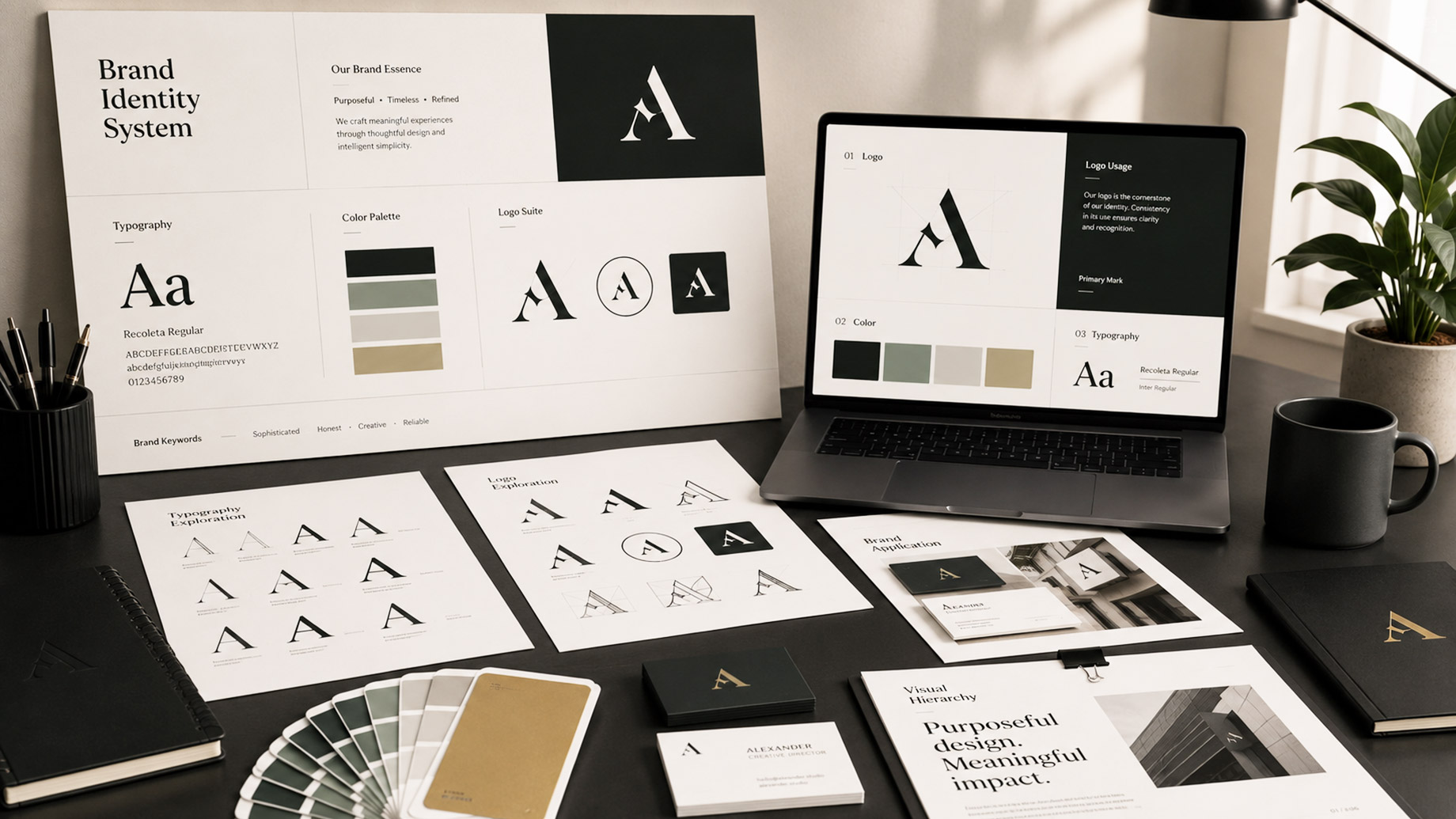
A logo alone is not a brand identity. It is the starting point for one. Around the logo, a complete visual identity system defines the colour palette, the supporting typography, the iconographic style, the photography or illustration approach, and the spatial rules that govern how all these elements relate to each other. Graphic design at the highest level treats brand identity as an integrated system rather than a collection of individual assets. Every element is designed to work with every other element, and the system is documented in a way that allows it to be applied consistently by anyone producing communications on behalf of the brand.
The Importance of Design Consistency Across Applications
The value of graphic design as a business investment is realised not in individual pieces of work but in the cumulative effect of consistent, quality visual output over time. A single well-designed brochure has limited impact. A brand that consistently produces well-designed communications across every touchpoint, from business cards and proposals to social media and email newsletters, builds recognition and trust that accumulates with every exposure. A specialist design agency that understands the brand deeply produces that consistent quality efficiently, because they already understand the brand and have established clear guidelines to work from.
Digital Design and the Website
For most businesses, the website is their most important brand asset. Quality web design translates a well-developed brand identity into the digital environment, creating a website that is visually aligned with the brand, structurally suited to the user journey, and optimised for the specific goals of the business. A website designed by specialists who built the brand identity, or who have deep familiarity with it, produces a more coherent result than one designed by a web developer working independently from the established visual system.
Working with a Specialist Creative Agency
An agency helps businesses leap ahead with strategic branding, logo design and websites that are as commercially effective as they are visually memorable. By combining creativity with strategic thinking, they create brands that inspire confidence and support long-term growth.